
You've seen regular goji berries. They're red, cheerful, and look like tiny raisins that hit the gym. Black goji berry powder is different. It's dark purple, almost black, like someone took the regular goji and sent it to a goth phase. But here's the thing: that dark color isn't for show. It's loaded with anthocyanins—the same stuff that makes blueberries blue and black rice black. So while goji berry powder is busy being mainstream, black goji berry powder is in the corner being interesting.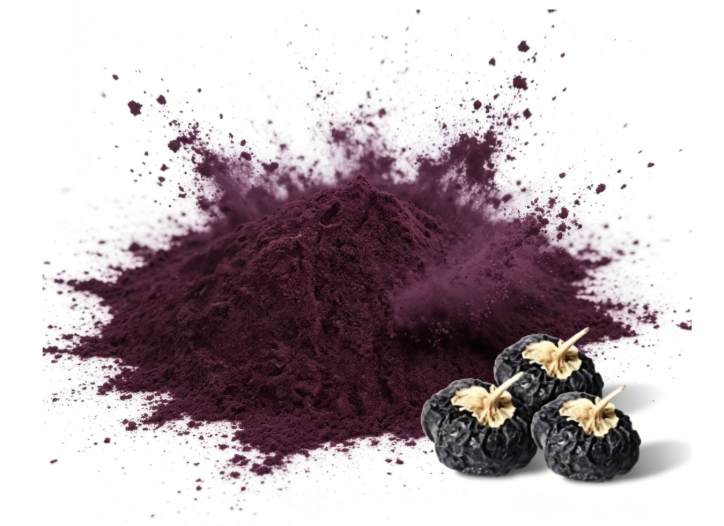
I once asked a buyer why she stocks organic goji berry powder and black goji berry powder separately. She laughed. "Because they're not the same. Regular goji is sweet, mild, and boring. Black goji is tart, complex, and actually tastes like something. Plus, it turns water purple. Customers love that." She handed me a glass of water with black goji berry powder mixed in. It was a deep, dramatic purple. Like a potion from a fantasy movie. "See? Regular goji can't do that."
The thing about goji berry extract powder is that most people buy it for the antioxidants. But black goji berry powder has a specific trick up its sleeve: it's one of the richest plant sources of anthocyanins. Not the same as regular goji. Not the same as blueberries. It's in its own league. That's why people who take goji berry supplement sometimes switch to black goji for a change. It's not better. It's just different. Like choosing a mystery novel over a romance.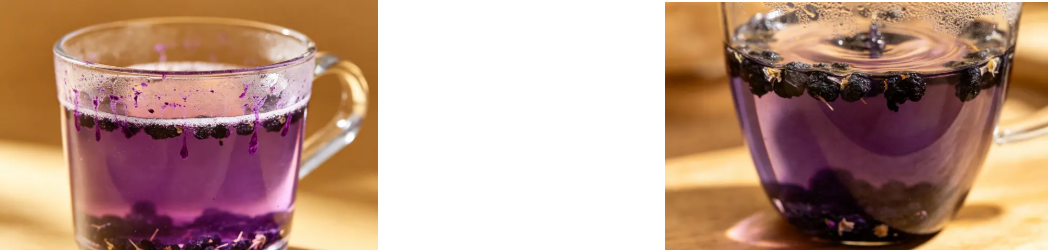
I visited a farm in Tibet where they grow black goji berries. The farmer showed me the bushes. "These are tough plants," he said. "They grow in poor soil, harsh sun, and cold nights. That stress makes the berries dark and potent." He handed me a handful of dried black goji berry powder made from his harvest. I tasted it. Tart, slightly sweet, with a wild, almost smoky finish. "Regular goji is the nice cousin," he said. "This is the one who rides a motorcycle."
The process of making goji berry extract from black goji is similar to red goji. Harvest, dry, grind. But black goji is more delicate. High heat destroys the anthocyanins, turning the powder brown and useless. Good black goji berry powder is deep purple-black, smells faintly fruity, and turns water purple immediately. Bad stuff is grayish, smells like hay, and makes cloudy brown water. You don't need a lab to tell the difference. Your eyes can do it.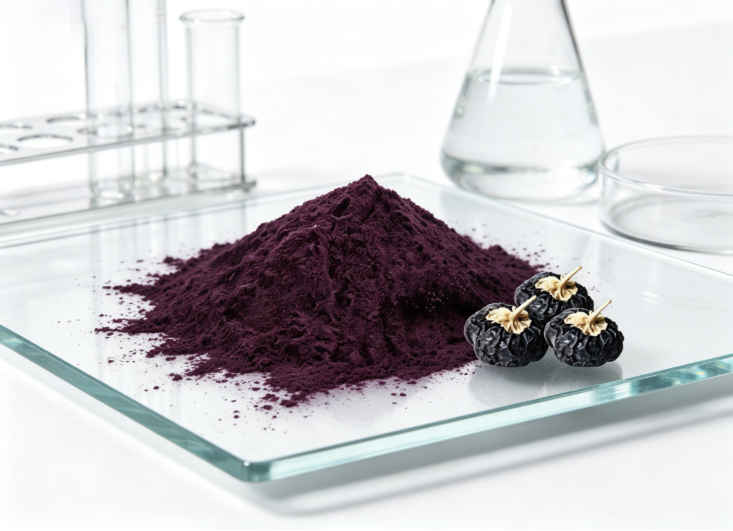
A smoothie shop owner once told me why she uses black goji berry powder instead of blueberry powder. "Because blueberry is everywhere. Black goji is exotic. Customers ask what it is. I tell them it's from Tibet. They feel fancy. They pay extra." She shrugged. "Also, the color is insane. Purple smoothies sell themselves."
If you're sourcing black goji berry powder, don't buy the cheap stuff. Cheap black goji is often mixed with regular goji or colored with who-knows-what. Real organic goji berry powder from black goji should be expensive, intense, and a little mysterious. Like the Goth kid. You don't fully understand them. But you respect them.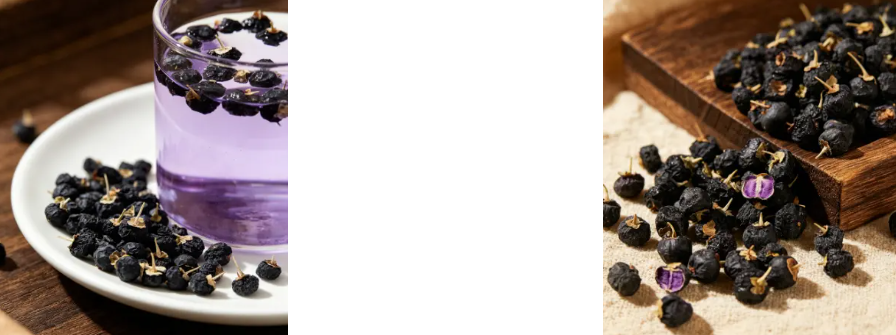
FAQ
1. Is black goji berry powder the same as regular goji berry powder?
No. Regular goji is red, sweet, and contains carotenoids. Black goji berry powder is dark purple, tart, and rich in anthocyanins. Different color, different taste, different compounds. Both are fine. Just not the same.
2. Can I use black goji berry powder in hot tea or cooking?
You can, but heat can damage the anthocyanins. For maximum color and potency, add black goji berry powder to warm (not boiling) water or use it in no-heat applications like smoothies, yogurt, or cold drinks. If you must cook with it, add at the end.
3. How can I tell if my goji berry extract powder is pure black goji or mixed with red?
Mix a small amount in water. Pure black goji berry powder turns the water deep purple or blue-purple. If it turns reddish or brownish, it's either mixed with red goji or has been heat-damaged. Also, taste it. Pure black goji is tart and complex. Red goji is sweeter and milder.


